The developer stopped responding
Production is still live, but fixes, credentials, and technical answers are suddenly unavailable.
We recover control of business-critical applications, stabilize what is running, and become the accountable team for maintenance, modernization, scaling, and hosting.
No repository? Weak documentation? Missing credentials? Start with what you have.
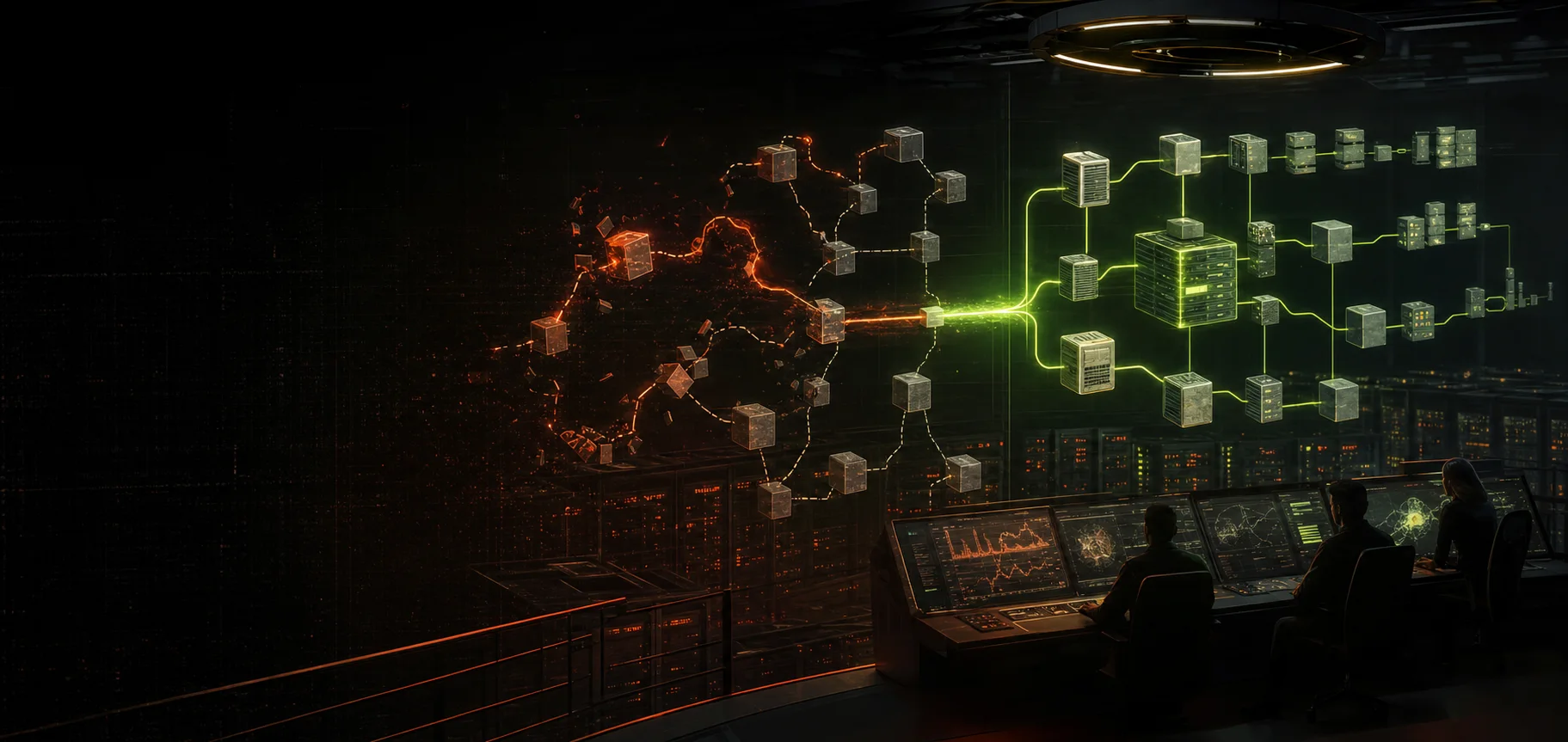
A missing developer becomes a business emergency when nobody else can deploy, diagnose, restore, or safely change the application.
Production is still live, but fixes, credentials, and technical answers are suddenly unavailable.
Code exists somewhere, documentation is incomplete, and critical operational knowledge lives in fragments.
Customers still need support, security updates still matter, and the business still needs new capabilities.
The engagement starts with control and safety, then moves into the operating model the software actually needs.
Reconstruct the technical picture and remove the failures most likely to interrupt the business.
Transfer day-to-day responsibility for releases, incidents, maintenance, vendors, and support.
Refactor, replatform, or rebuild in controlled stages without abandoning working business logic.
We work from the outside in: secure what exists, map how it works, reduce immediate risk, then take ownership.
Share the business impact, what access remains, and which failures or deadlines are most urgent.
We map repositories, infrastructure, data, domains, integrations, vendors, deployment paths, and support obligations.
Backups, monitoring, access controls, patching, and the riskiest operational gaps come first.
We establish documentation, an operating cadence, service expectations, and a prioritized modernization plan.
Sometimes. We begin with the production system, hosting accounts, deployment artifacts, backups, vendor access, and any copies that remain. The first step is determining what can be lawfully recovered and operated.
No. We stabilize and understand the working system first. Refactoring, replatforming, or rebuilding is recommended only when the evidence and business case justify it.
Yes. We can assume responsibility for infrastructure, monitoring, backups, deployment, security maintenance, incident response, and capacity planning.
Urgency depends on access, risk, and availability. A short confidential conversation establishes the immediate situation and the safest first actions.
Developer Gone is operated by briskData LLC, an engineering and managed infrastructure company focused on production software, cloud operations, modernization, and technical continuity.
We will help you identify the safest first step, whether that is emergency recovery, a takeover assessment, or a planned transition.